• About

Storehaufovic's Blog

~ Just another WordPress.com weblog

Storehaufovic's Blog

Category Archives: Uncategorized

Front porch and local pub wisdom from the South…or that way…

15 Thursday Feb 2018

Posted by storehaufovic in Uncategorized

≈ Leave a comment

Stories as a way in the South….
People tell you what they really believe through telling stories down here in Texas. All sorts and colors of stories. They’ll tell you their religious and political beliefs implied. Not directly. And you test one another through tales as well. Just met an old timer who told me old Spanish stories when Texas was still deciding who it was, or rather who to ally with in being itself.

Great stories, little fables and parables—that’s how people are here. I like the ways of the South despite her long shadows. There isn’t a day goes by, that i don’t hear a story here. I appreciate that.

Heard one today about a man’s grandma who used mascara on her legs because in that day, you couldn’t afford stockings or hose. And carried that mentality into his generation—rationing, being careful with resources, and thinking about the next generation. Good values.

Plus, this little place welcomes all sorts of people, but to really get to know each other, you will need to tell a good story. Then, you have a place at the table forever.

Plus, stories last forever if they are good.

So why do stories still matter:

Story telling is a way of carrying truth in the south, and many other parts of the world. Stories hold things like dreams do, in symbol.

All the parables are contained in a good story down here. I myself was the only one to return to Texas in my family. The myth of Texas has many aspects of the truth in it. The sky really is bigger than anywhere I’ve lived, which is nearly everywhere. So possibility resides here.

Appreciating Texas and Austin’s ways today. Friendly creative and story telling. Like where I grew up but more global in its thinking. What starts here, changes the world. But almost always it starts in story.

We tell stories to get to know one another. We don’t make points, we tell tales.

If you look at the two ways of knowing as Greek or Hebrew. A way of abstracting principles versus telling or embedding things in concrete symbols as also native Americans and indigenous peoples tend towards, then texas’ epistemology certainly leans towards the later. We know through symbolic story.

I appreciate that about it. Makes you have to become a good story interpreter to get at the heart of things. I like that practice.

I love considering different cultural and regional ways of knowing and expressing what you know thus far. Story is certainty the container of knowledge down here. Each place has its gifts! And there is always this implied-you can go to the moon-mentality just in the background. Nice combo.

Plus, I learned today from an old couple, that the crawfish are coming out early this year. They teach the weather patterns round here. Nice.

A little Porch Pub wisdom your way today!

The gifts of your regions….

15 Thursday Feb 2018

Posted by storehaufovic in Uncategorized

≈ Leave a comment

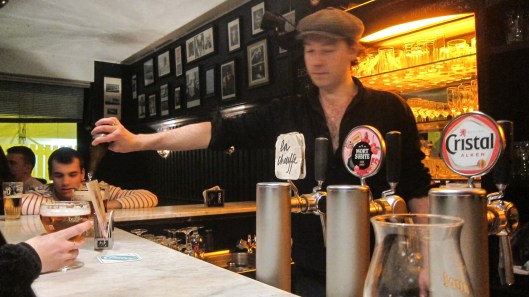
I love thinking about the gifts that each region of the earth reflects best, and how to help them work in tandem! Today was talking with Belgian friends…

Thinking of my friends in Belgium today, having just spoken to a friends from there—creative friends, as Peter Bos called them collectively. Curious, friendly and easy going-good characteristics that region reflects! Each region reflects unique aspects of the big pattern. Thankful today for friendliness, such an underrated way on earth these days!

On the phone, i also sensed some of the eccentricity of the dutch, but with a laid back manner which is rarer in the northern parts of places. Being, is still valued. I appreciate that emphasis on relationship above just getting things done that specifically Flanders carries and reflects well! Some people see valuing relationship above productivity as a fault. I tend to value that characteristic more and more as i get older! Anyone can produce, few can Love well. Thanks to my belgian friend for reminding me of that today!

If we honored more what each nation and region is meant to carry, we would get along better, i think! And get to see more of God’s overall integrative expression of Himself! We work in global tandem down here. There are unique gifts on certain regions of the planet. Good to honor them, and express our needs for those eternal characteristics we each reflect. Plus, friendliness, for instance, the one i encountered today, can never be overrated! God, if nothing else, is a Friend!

Let’s find those gifts that one another highlight, help them shine, and find how they relate to our own!

I know that there are shadows to each region as well. As a case study, California is a great synthesizer, and can think at the speed of the north, but with the story telling wisdom of the south; yet, struggles with insularity, isolation from the whole, and materialism (which also means disparity between rich and poor–one of the biggest homeless populations in the US etc) for instance.

Yet what a great synthesizing teacher and interpreter. So many spiritual and tech movements and new metaphor have first been symbolized by her. But, not everyone can interpret her language and way, and there is a need for humble servanthood to help her wisdom get out to the rest of the nation. Still, like Paris, she speaks in poems and symbols and has a high level of visual intelligence. Yet a poem must have a servant art, as all art is meant to be a servant.

Each region, of even this nation has their own gifts, shadows and struggles. True identity, broken identity, and redeemed identity! Just like people. What God intended to reflect through you, how you messed it up, how He redeemed it. Then, we have the question of how to share our redeemed identities with one another to make a fuller expression!

If we can encourage the gifts and their connectivity to other’s, we end up with a better banquet table I think! Where I grew up is a royal haven, or safe place for regal things to develop. This got wounded of course, by pride and a sort of class system which was inherited from europe. Yet, it still is a regal safe place to haven. It struggles with connectivity with the rest of the nation at times, but also stands, as a highly educated state somewhere in between the elite of the north and elite of the south—those who could start and heal the north south divide still present in this particular struggling nation.

Interesting to think what the gifts of your region could do, and how they fit into your nation’s larger healing process and dialogue. NC is not deep south, but relates to the deep south and the intelligent quick witted north. It should be a haven for conversations on how to unify the nation at the heart level.

You have to look at integration of your region of nation as well as the global banquet of gifts to start to desire to heal your local gifts, and call them forth in tandem with other’s.

Europe as a whole, for instance, not unlike America, has a north south division. There is of course also a east west division , but often i see the north south divide as more spiritually intense. Two different ways on the same continent which need to integrate and share gifts. As in England, the industrial north and the literary south, but so much dialogue is possible now between the various parts of our nations or regions, if we can recognize one another’s gifts.

Certain places struggle more with isolation; other’s with creativity. But each of us need one another and reflect different aspects and gifts.

What’s the gift of your part of the world, and how can it be redeemed to work in relationship and mutual blessings with others? That’s been one of my guiding questions as a global person.

Of course, every region has been wounded, which is usually aimed at the exact gifts of that region. Sometimes we can find the true identity of that place, by looking at where they were most wounded. Just as it is with people. I love thinking of different regions of the world and how they need one another to be whole. Thankful for Belgian friendliness today, as well as the friendliness and can do spirit of Texas today.

We want to find, celebrate and heal our own gifts and one another’s! And then see how they are meant to collaborate and compliment on another into a fuller expression! That’s my passion, anyway! Again, what are the gifts you carry, your neighborhood and city carry collectively, then your nation? And how to move to healing those, then considering how they could bless and collaborate with other regions of the global family! Fun meditation today!

on a local cafe napkin today, watching…

15 Thursday Feb 2018

Posted by storehaufovic in Uncategorized

≈ Leave a comment

In a local cafe today…
Today in my local cafe, two guys writing songs out loud to one another, about the just before Spring place in life, another set of friends, working on a new website, still another annotating old musical notation from Bach, still another older couple talking about the weather, and how the crawfish have come out early. There are students, professors, and long time locals, talking Willie Nelson and the new south. There are vets in the corner playing hard darts, and swapping war stories, there is a couple who do animation and run one of the local fest. There are the public television folks talking about what matters to cover locally. And a few new folks from California and Seattle considering bbq and music and where they meet. Nice local banquet conversation. Two priest from different denomination discussing local breweries and doing some needed research. A golf pro, a face book exec, a beer distributor, an award winning author or two hiding in the other corners, and me observing the whole in thanks. I love diversity. My african american friends just showed up—huge family, this could turn into an observational party soon. They are charismatic and bring a long table wherever they go. This could easily turn into a Kingdom party!

My Loves…

14 Wednesday Feb 2018

Posted by storehaufovic in Uncategorized

≈ Leave a comment

My love is a secret, whispered over time into my inner heart. Thankful for this long unfathomable poem my wife is. My love is a strong mystic poet and poem, a leader and teacher, and a dreamer with land in her veins. A Scottish celtic song. A Seer, with her feet on earth, but her eyes in heaven. A steward of beauty.
Thankful for her way on the earth today, and every day throughout the year! Love is a mystery which comes to earth wrapped draped and fabric-ed in Love. Thankful to be married to a practical mystic and teacher who still puts up with my shenanigans!
God has been kind to me through Amy.
Of course, our Real Lover, the object of our ultimate affection who gave us to one another in the first place, stands behind and between us smiling through one another as we gaze at one another in wonder and love, and as we learn to care and love one another in time. Good to have a common Lover between us, helps us see one another’s beauty more acutely and accurately.
Thankful for that Lover today also! Love’s context and contextualizer who teaches us how to love one another, down here. Every particular love flows from that fact: For God so loved the world….nice that we share that Love.
Anytime, i forget I’m loved, i look at Amy, for God so loved me, that he gave me this lovely poem to learn to read forever….thanks God, and thanks Amy for being my forever valentine! Love is a long lesson, great to be learning it with you my love!

Amy
IMG_0646
IMG_2579
IMG_2580
IMG_4633
IMG_5268
IMG_5478

Vincent Van Gogh as Parable

13 Tuesday Feb 2018

Posted by storehaufovic in Uncategorized

≈ Leave a comment

Towards an article on the book Van Gogh’s Ghost Paintings:

Art as an act and lifestyle of reconciliation and place where sorrow and joy come together in healing.

The parable of the life of Vincent Van Gogh…

I’ve been thinking about Vincent Van Gogh’s art since college. I was able to see many of his works and visit two of the places he lived in France. I was young, but drawn to the sad brightness i saw in his life and work. I was friends with a professor back then, who was studying Vincent’s spirituality and where it intersected with his art. I think that contagious seed got in me, as i have always been interested in where art and spirituality meet.

My mother is an artist, my father a minister, so there is something in my life which has always been trying to integrate the two-to bring the two under the same roof in myself and what’s around me. I think i always wanted to live in something like an art church, or gallery house temple. I studied in Switzerland at L’abri to find theological seeds of integration for creativity and spirituality, then later did graduate school in art therapy, studying how art relates to healing on making things more whole.

As a boy, i had an older artist friend named Noah. He was trying to find a spiritual context for his work, but couldn’t and ended up killing himself. This propelled me even more to find that creative context for the Noah’s of the world. To make a haven for artist to integrate their faith and their creativity. I’ve been part of leading several creativity arts communities over the years, with just that mission.

Over the years, this fascination for the integration or reconciliation of the two parts of being human, has never waned! And I’ve come to see art as a dimension of life and myself where we can meet and come to know and be transformed by God. I’ve been fascinated to study the lives of others with what i call a “baptized imagination.” CS Lewis wrote once that when he first read his mentor George Macdonald’s fairy tales, his imagination got baptized! I relate to that, and when i encounter artist who have gone further in integration, i think, it re-challenges me to go even deeper or more holistically, under those waters of unification in Christ!

The late, Francis Shaeffer used to talk about Jesus’ Lordship over the whole person, and the whole of Reality. That He was then, Lord over our imagination, and culture-the symbolic part of cities, and nations. That He is mending the images, and re-attaching them to the true new identity! That got me interested in the role of art in healing people, places and things, more whole, and more then, themselves. It’s still true, and He is bringing them all under the Roof and into the House of Himself-the House of Love, as Henri Nouwen would call it. The art dimension of things is one strata which is being reconciled to and in Christ. For the house as everything, is also symbolic, as Van Gogh put it! God is into healing the image and the person, and making the two one. So, Art is also part of reconciling things to and into God, through Christ, and His Sufferings.

God is One (the Shema prayer), and is making His creations one. What is in rebellion is dying or decaying, or dis-integrating; what is in Him, is integrating- being made whole and true. Art can be part of reconciling the creative dimension of things to God, part of bringing the whole self “home” into that space of intimacy between The Son and The Father, where all healing occurs. That is it’s priestly task. But few artist are great priest!

That is few artist have really placed their amazing gifts on His Altar. What does it take for an artist to know God in sacrifice and suffering? There are few Abrahams in the art world—those willing to sacrifice their son. Many are distracted by fame, or their own vision etc, few bow down to Him, and are thus raised up. In this book, we meet an artist who did humble himself and wanted to encounter God through all he saw and painted. As a result his paintings have the spirit and way of Christ in them, though few are overtly about Christ. Vincent Van Gogh was one artist i think brought together the suffering and joy of Christ onto one canvas, and lived as a type of parable of attempted reconciliation between art and true spirituality centered in Christ.

I think Vincent intuited that God was healing the symbolic not just in us, but also in His Creation through incarnating and being with the suffering of our daily lives, and that our art had a role to play in that. The presence of Joy in suffering, is always Christ! One of the lessons of the parable of Vincent’s life was art is meant to be a place of restoration, reconciliation and healing of ourselves and of creation. The method he used was empathy with other’s suffering. This is the methodology of Christ as well, who comes into His Creation as a suffering servant, and expressed Himself symbolically throughout His Life on earth.

And interestingly, while many painters have painted Christ without knowing Him; Van Gogh knew Him, but didn’t paint him. Interesting. We see that few painters have really attempted to paint the resurrection for instance. Understandably, because then you would have to encounter the Risen One! The few who have, knew Jesus! Back to Van Gogh’s life, what we get from reading his many beautiful letters and viewing his works, is a many who’s spirituality is overheard in his process.

He clearly wrestles with the suffering Christ, and in fact, through that, is drawn to representing suffering around him. So was Jesus. This book is about Vincent’s repeatedly being drawn to the Gethsemane narrative in scripture. The hour of Jesus betrayal and suffering before the Cross. Interesting, that this artist was so drawn to that particular part of the story, but also felt he couldn’t paint it accurately. He painted it twice and destroyed both times. As if he could not fully fathom the level of suffering of Christ in that scene.

Yet, Christ clearly met Vincent in suffering. And Van Gogh even wrote he preferred storms and gethsemane over paradise. He felt it was more beautiful, probably because that’s where Jesus always is. The implied question, is beauty not where Christ is incarnating-that space where He is reconciling broken things towards His Own Wholeness-runs as a living motif throughout all of Vincent’s art. The One acquainted with all our griefs is always implied in Van Gogh’s creative meditations on life around him!

The paradox of joy and suffering being tethered to the same Pole—which is the Cross of Christ—this theme comes through over and over in Vincents works, through direct encounter with the suffering in himself and those around him. No sentimental romantic escapism in his work; always the presence of suffering labor with a ray of joy and hope. Feels more true to what actually is down here. In this sense, he was an authentic artist with an honest vision of how life actually is. So much of christian art of course, has been sentimental—denying either suffering, or on the other end joy. Christ has both. For the joy set before Him (which we are-ie His Joy) He endured The Cross.

King David gave us this idea of living life as a portent sign or symbol. Several biblical characters had their lives as part of their teaching. I think of the prophet Jeremiah, whose biography became part of his message and God’s. In the new testament or covenant, i think of St Paul, whose conversion and life story illustrated his message of hope.

Van Gogh’s life also became a parable. Remember that Jesus Himself did not just speak parables, but lived and incarnated the grand Parable. I think some artist, and people in history echo this Voice. MLK was one. People, whose life story, became a reflection of The Bigger Stories. Yet, to become living portents, require a rare yieldedness.

For an artist to truly lay down their lives, produces art in service to humanity! In this sense, art becomes a living sacrifice of praise despite, yet in clear view, of pain. That’s one of the fruits we look for. The servant artist is rare in history, but I think Van Gogh was trying to become one. Whether he arrived, God only knows, but we get to oversee and overhear his struggle to become a painter of God, and one i believe was trying to be centered in Christ and His incarnation into our daily suffering—His daily Cross, which we still find all around us now! God is always with the weak, the broken, the bruised, and even is said to look for contrite (bruised) hearts.

From his letters and paintings, I think Van Gogh knew that personally, and even saw himself as a bruised and broken man of The Cross. One who was drawn repeatedly to Gethsemane! Maybe he even identified with Christ’s compassion on the man who lost his ear in that fervent scene. Jesus had compassion on that man, while Peter wanted to take him out, you recall!

His lifelong meditation of joy in sorrow as seen in the daily common scenes around him, was Christ like. Incarnational art always deals in sorrow, as Jesus was also drawn to The Cross; and yet there is also a hint of intimation of the Resurrection present as well. For the Cross is tethered upwards, as the old preachers say! Most people want the resurrection without the Cross. But this makes for bad art and bad living—it’s lopsided!

Van Gogh’s art balanced the awareness of joy and suffering in something even as simple as old shoes, and leaning chair, a drab bedroom, or even as glorious as a sunflower. At the end of his life, Vincent painted the heaviness of storm at sunset, with black crows lifting off into a foreboding sky. Many are depressed by the image. I find it to have hope in it; because it feels true to how things are here, for now, yet hints also at that dawn already rising in our hearts, as St John, the artist of the new testament put it. Or as St Peter put it, we endure trials here, which make genuine or authentic our faith. I think Van Gogh had at least an authentic faith!

Van Gogh for instance, saw the parables of Christ in daily life and suffering around him. So didn’t need to paint actual bible scenes, but rather found Christ in the everyday suffering and labor around him. In this sense, he did not illustrate the parables but encountered Christ through them around him.

Painting as parable also led Vincent to become a parable himself—in his case about art and spirituality and where they meet. One key to interpret his life is to see that he saw his art as his spirituality, but was also willing to lay it down for others. In this way, he incarnated with way of Christ’s service and sacrifice. Creativity is a servant.

Few artist are truly humble. When you encounter them you can tell they give God all the glory inside, and just serve the rest of humanity with their gifts. This is mature art. Painting as parable and art as place of spiritual transformation are two themes of Vincent’s life.

The artist and their art can become a parable Jesus is speaking. To become the art you are making is the essence of spiritual formation, but it requires us to lay down our gifts and meet Him in suffering. I think Vincent did. The bright sadness which characterizes the life and art of Vincent Van Gogh, reflects the nature, and at times even the presence of Christ. Thanks Vincent.

Very Raw midrashic notes toward and article on finding Beauty in suffering….

12 Monday Feb 2018

Posted by storehaufovic in Uncategorized

≈ Leave a comment

The paradoxical unity of suffering and joy, sadness and healing….

“Yes, for me the drama of a storm in nature, the drama of sorrow in life, is the best. Paradise is nice, but lacks the beauty of Gethsemane.” Vincent Van Gogh

“All of Reality is also symbolic at the same time.”

Joy and suffering are teethered to the same pole—that pole is The Cross of Jesus. This is why great art, reveals beauty in suffering.

Art is meant to serve us with a clearer picture of Reality! Reality is that Love is found in our suffering. Christ incarnates as The Cross always, and then the resurrection brings what St Peter calls, “a living hope”. Great art reveals both.

For sorrow is most beautiful here, because Jesus is still there.

Bright Sadness:

How can we, as St Paul put it, “be sorrowful, yet always rejoicing”; how can we learn to live in the “living hope” which Peter spoke of, to have that bright sadness, which realizes that Jesus is always in the garden of Suffering, and already reigning silmultaneously.

The dutch artist, Van Gogh was asking this question in his own unique eccentric way. He found Jesus in sunflowers, worn worker’s boots, and in simple scenes of loneliness and human sufferings in the fields. How can we move into that bright sadness which Jesus walked and walks in-that yieldedness to suffering and God’s presence in the simple things around us? To be every joyful while in clear sight of suffering around us. How can we find the tone of Joy in the blues about us?!

Suffering exist in the continuum of a living hope, which is Peter’s reason to live well. In I Peter, he says with this living Hope before us, let’s endure our trials as places of transformation! Still true that.

(Signs speak to the healing of understanding, and wonders to the healing of the imagination. Art is a wonder, meant to make more whole how we image things. The symbolic is always present in everything around us, but we must help other’s see it.)

The role of art is to incarnate Christ”s Life into the symbolic dimension, so that we are in awe of God again. That’s a servant’s role, and so one must put their own art onto the Altar of His art of Life.

What art may be:
Art as incarnation, and ushering in the Kingdom into the symbolic.
Art as suffering well.
Art as expression of Christ on earth through the symbolic.
Art as tabernacle of meeting through the symbolic parts of us and God.

Social role of art:

Art is meant to mid-wife collective imagination, which is why the artist themselves must be in a servant position! We serve the healing of the imagination.

And yet…

“My art is less important than my family’s life.” Vincent Van Gogh. (So few artist get to that level of sacrifice!) Art must yield and enter into life’s suffering to be made whole.

Sorrow, pain and suffering makes the most beautiful art, because Jesus is always there in suffering—the One acquainted with all our griefs. For this reason the storms and gethsemane are where beauty is found. “This is the paradoxical unity of suffering and joy down here.” Vincent Van Gogh.

There is not escapism or romanticism or utopianism in true art, rather there is incarnation into the particular sufferings around us. Jesus is always meet-able in the storm and night car crashes around us daily.

The Cross and Resurrection work in daily tandem down here. I paint suffering, so that i will know joy more incarnately.

Art is meant to serve life, not the other way around. Van Gogh realized his own brother’s life was more important than his own art, and so was willing to lay it down if necessary so his brother’s and his son’s health would improve. Art yields to life!

The paradoxical unity of suffering and joy is my subject on earth. And certainly was Van Gogh’s!

Jesus is always sorrowful yet always rejoicing. How does art meet Him there?

Since we know that joy and sorrow are tethered to the same pole, and that pole if The Cross. How can our art reflect the beauty in suffering?

Sorrow is most beautiful because Jesus is always there! The One intimately acquainted with all our griefs shows up in suffering. And our best art, is made in that space!

It’s always resurrection in death down here, and that’s why great art finds Christ in suffering, and is therefore never just sentimental, escapist or romantic, but living spirituality whether overtly religious or not, meets Christ in daily moments of suffering.

Once, Van Gogh was willing to sacrifice even his art as less important than his brother’s life, i think his art got more profound. Once we get our art on the altar of sacrifice, then it becomes more useful.

Everything has a symbolic dimension, the artist makes that overt. But if that artist also lays down their life and gifts, they are able to get into another layer or level of beauty—the actual suffering of Christ in His Own creation.

This seeming paradox of the storm being more beautiful than a sunset, is one of the things Van Gogh left us with. That Christ is met best and most deeply in pain. The brightest glory is met in suffering. The resurrection is met through the Cross. All great art, has this inner understanding in it.

We are not meant to escape suffering, but meet God in and through it. That’s what Van Gogh was saying, among other things, through his paintings of worker’s shoes. He didn’t need to paint the cross, the Cross of Christ was present in those worn out tired and glorious shoes of the urban worker.

Christ is met best in our sufferings. Art is a servant of that way.

Lots of us want resurrection without death, but that’s simply not how life works. The best artists teach us to see glory in suffering.

When you lay down your own gifts or art, you want to serve a truer vision of what actually is. That vision is that God meets people in their pain, and suffering, and walks along side making us more whole. The meeting point is suffering, the outcome is glory. Art is meant to serve life, not the other way around.

To become the message of your art, is more important than making art. That He incarnates into you what you are trying to see and teach, is the message. When an artist does this, their life becomes the message they are trying to express. That’s the way of Christ in artists.

When your art is just a vehicle of incarnation and transformation something grand happens. Like King david your become the sign and wonder, you become a portent, model and piece of art made by God to express something. Few artists get there, where their actual lives become the symbol of what God was wanting to say through them about Himself. We become the art we are making as we yield it to Him, and place our whole being on His Altar.

At one point, the artist Van Gogh decided not to make overtly religious art, but instead to express His spirituality directly through the suffering around Him. He felt it best to disclose Christ through the peasants and village suffering around Him instead of painting the Cross.

He felt he could say more from painting glory in a storm well than painting the nails and blood. But he was still telling the same gospel story. “If I can’t meet Christ in the daily struggles around me, i certainly cannot attempt to paint an image of His Cross.” So much christian art has missed this basic incarnatiional point he was making through his art. So, we see so much sentimental or overtly religious art, rather than telling the gospel, His testimony, through the particulars of ours.

We don’t have to be overtly religious to express His Life in ours. His Spirit can be expressed through a painting of an old worker’s shoes. “One does not need to make overtly religious art, to express the actual message of a religious scene; that is, to capture the spirituality of Christ in that scene.” His Story can even be told directly through ours—as in the case of Jeremiah, Paul and others whose biographies became His. That is, whose life became living parables.

Van Gogh liked translating the parables into his current surroundings. That farmer, that woman who is tired, that afternoon when everyone in the village was depressed—contains all the old stories as well, if seen through the filter of the Heart of Christ! That was his main point, perhaps. We can see the gospel, all around us, if we look well and enter His suffering glory. We can be sorrowful but always rejoicing in all we see, as we enter Him and His vision. That living hope still stands, but we can’t avoid suffering or even try to escape it. Suffering is the most overt door into the house of Jesus. He’s always lived there.

This artist tried to overtly paint a Jesus scene, but just it didn’t feel true to him. Instead, he decided to paint the same incarnate message through pairs of old workers shoes, and storms at sunset, and potatoes in lament of lack of rain. I understand that way. And respect it. His one overt painting was Isaiah 53 about the suffering Servant. Makes sense, as he stated it indirectly through another prophet’s words. The suffering Servant and Gethsemane were perhaps this artist’s guiding inner images in his own struggle to meet Christ daily in life.

“All of reality is also symbolic at the same time, and Reality is filled with suffering and joy.”

Why paint personal:

“I’ve decided the paint the things closest to me as my true incarnation of spirituality!”

Religious art often tends to be too overt about its message rather than incarnational. Once the message has become who we are, we are free to express it through a flower or landscape, or a subway scene.

Afterthoughts: When an artist is more concerned with encountering God than expressing themselves, the trajectory of their journey becomes a teaching or message for others.

When we put our gifts on the altar of sacrifice, we become servants for others, and our art has another level of His Authority which enters.
Art as serving others, is still radical. Few artist make it to a place where they serve the whole with their creative gifts; most still need validation or fame, and don’t get to a Jesus like place of serving with your already king or queen—ness. It’s rare, but when it happens in a person, very beautiful. King David would be an example, as are many others throughout history. But it’s still unusual. The temptation for self glory are high.

Art as servant is still odd for many. But we are meant to serve with whatever gifts we were given. And art is just another medium of the formation of the Life of Christ in us—at least for those who have met Him.

Lastly, and perhaps the point of this raw entry: suffering is a place of always meeting God. And hope and joy are always hanging nearby on that corner.

To embody or incarnate the teachings of being in Christ is more important than representing them, and as we prioritize that, our art will reflect it.

But life comes before expression-being precedes symbol-yet, both inform one another. Expression is meant to serve being and be in tandem with it. If our art, is a place of meeting and devotion, it may be blessed to express that deep to Deep inner dialogue which will outlast us. Like our spirituality gets to be overhears—like St Paul and Jeremiah’s. Few artist get there. When they do, their lives and art become the same Message.

Art then is one sense, is just a medium to meet God through. In another, it reveals the symbolic part of that meeting. So when an artist actually seeks God, and comes into intimacy with Him, their art becomes a testimony. And a story for us all.

When art becomes a window into conversion and ever growing intimacy with God, that artist themselves become a living portent or symbol of how humans are meant to relate to God. That was the case in King David, and many others throughout history, but is still rare, and worth noting forever.

To discard fame, celebrity and entertainment and enter actual out loud spirituality and public death and rebirth is still perhaps the highest calling of the priestly role of artists. To live out loud in our spiritualities, to walk the wire in the publics view, is a rarefied sacrifice which God always takes note of, i think. Those who have, leave a legacy of more than fame, but on of participating and incarnating a much longer and potent story of being for us all.

Last thought: suffering is a place to meet God. We meet Him in the suffering around us, and we find ironically, His Joy there. When artist avoid suffering a place of meeting, their art loses it’s force of life, and goes flat or untrue to what is. This is because Jesus is always in suffering, and making it beautiful. Beauty is met best in suffering. If we can see the glory in pain, we can get a glimpse of Jesus’ heart. And then express it.

Our paradoxically developing hearts…

11 Sunday Feb 2018

Posted by storehaufovic in Uncategorized

≈ Leave a comment

My heart is undivided, yet often in many places.
Part of me is always in heaven, part on earth, and part somewhere in between in dirt and glory….with those i love….
Feeling like this this week-a wide range of emotions and thoughts, intuitions and inner lament celebrations; but also feeling that belgian sky today, as we have a dear friend over at our place in Antwerp!
I love how sadness and rejoicing are tethered to the same pole in the Spirit, and deepen one another! And how the heart works in tandem.

considering things...
talk
angels in sync.jpg

Speaking the languages and the mediums of Love!

11 Sunday Feb 2018

Posted by storehaufovic in Uncategorized

≈ Leave a comment

Speaking the languages and the mediums of Love! How can we translate our love into the other person’s language and into their medium. The best medium they receive the weight and impartation of that love? One of the questions i often ask in communicating with friends globally is how can convey the message, the love, in a way which imparts the tone of my heart towards them?! What is the medium which most blesses them, and allows them to receive the love I have in my heart for them.

The key is discerning love regardless of medium. There are different weights of communication. We can discern them on line or off. Tone is everything, of course, but also considering how to speak in the tone of love in a medium which makes sense to the other person, matters!

There are different levels of intimacy, but when everything is equalized in media, we have to discern the weights of glory, the inner tone and weight of each communication. That’s just part of discerning the heart in our times!

Social media can challenge this, but can also be a great source of blessing to those who receive in that medium. I have some friends who can send two words via text or chat, and I cry from the amount of Love behind and between the lines. Others, i like a whole letter, with paragraphs and commas. It’s interesting the weight of communication in an era when there is so much communication. It’s still probably primarily about the intentions of the heart! How discern love behind and in between the words, becomes the receiver’s challenge!

I think you still can sense the weight of love behind the words, regardless of medium! Everyone is different, some people need that face to face in order to know Love. Other’s a long email, others a quick caring like. Good to know what makes you feel and enter Love, and also how others receive it.

But it is always about looking at the heart’s intention behind a gesture of love! That’s what i try to do anyway. And pray into figuring out what might make this person feel the most loved by my communication! Everyone is unique in that–how they receive love and give it! Of course, my dad delineated the five love languages, but how to put those in the many mediums now available to us is a new and exciting challenge, i think! Is this person a text person, a Facebook person, a long hand written letter person, a go visit face to face person etc. Good to consider as stewards of Love!

How can speak love in one another’s mediums of reception! This is an especially important question in a social media age! And it’s also often, a generational question. How can I convey my care to this person in their language, and in a medium which carries the weight of that Love!

The languages but also the mediums of Love matter. How the other person best receives your love matters. And is worth considering. I often ask before writing someone, since my language is language itself—words; is this the best medium to convey my heart’s care for them. Is email or a hardcopy letter better; is a phone call, a text… each of my friends tend to communicate in a unique medium. Should i make them a piece of art to express my care (which is one of my favorites!). Should i just go see them, or plan a weekend with them? Should I like their posts etc…good to think about not just the language, but now the medium to convey our love for one another in this era!

Jesus would feed or make breakfast for some people. For others, teach them, like Nicodemos; at other times, he would just sit with people to let them know they were loved. His Heart was always love, but He translated it into many mediums. So should we. So, what and how God is communicating His love to others both matter! Good media meditation today! For, the mediums carry the messages of Love.

Can I learn to speak better not just in the languages of love, but in the mediums which carry this love into another’s heart?! Been thinking about and trying to practice that recently!

Just as when reading a book or poem,to get towards the real meaning, we have to ask, what is the author’s tone–his or her orientation towards the words. So it is with modern media. The heart is what matters most in interpretation. Then as the heart grows, learning to speak on one another’s love languages and mediums become part of discerning and expressing God’s orientation towards one another!

Fun thinking about language and mediums both expressing our love towards one another well! Let’s become masters of communicating Love into one another’s hearts! Let’s become more like Word made flesh towards one another, and into one another’s lives!

raw midrash on repentance….as a daily practical practice:

10 Saturday Feb 2018

Posted by storehaufovic in Uncategorized

≈ Leave a comment

Midrash on repentance as a daily basic spiritual practice:

“Whoever (person, city nation) conceals their sins does not prosper, but the one who confesses and renounces them finds mercy”.[Pr. 28:13]

“Repentance is given before anything else, by definition.”

To repent is to agree with how God says things really ARE. We are sinners, and in need of forgiveness and Mercy. It is to align with the facts about Reality. All have sinned and fallen short of the glory of God as Isaiah puts it. So we all need to repent—to confess, change and turn away from sin and towards God.

Looking at repentance again today! Good meditation in our times—the practice of repentance. The first commandment Jesus gave was repentance!

Repent-turn from and toward, change your mind about things, and act differently. Confess-agree with Him that you are a sinner. And accept His forgiveness, and offer it to others. Change starts in confession. It’s metaphysical, as we are sinners, and He is not, we need His Actual Life to make us pure or whole. God looks for a contrite (turned) heart.
To lust after is sin, for instance, because it means we do not trust God to provide what we really need, and instead take it by ourselves. It’s a sin related to coveting what is not ours. Forgive us Lord for lack of trust. For striking rather than speaking to the rock.
Greek—repent means to think differently after.
Talmud Yoma 86a). “Repentance and works of charity are man’s intercessors before God’s throne”.[5] Sincere repentance is equivalent to the rebuilding of the Temple, the restoration of the altar, and the offering of all the sacrifices.[6]

In the New Testament, the first command that Jesus gave was to repent.[Matthew 4:17] He thus repeated the message of John the Baptist.[Matthew 3:2][25] Jesus sent out disciples who “proclaimed that people should repent”.[Mark 6:12] In his Pentecost sermon, Peter the Apostle called on people to repent,[Acts 2:38] an appeal he repeated in his sermon at the Beautiful Gate of the Temple: “Repent therefore, and turn again, that your sins may be blotted out”.[Acts 3:19] Paul the Apostle likewise testified “both to Jews and to Greeks of repentance toward God”[Acts 20:21] and said that “The times of ignorance God overlooked, but now he commands all people everywhere to repent”.[Acts 17:30]

The Greek word used for repentance in the New Testament is μετάνοια (metanoia),[26][27] and the Greek verb for “to repent” is μετανοῶ, contracted from μετανο-έω (metano-eo),[28][29] as in Mark’s account of the initial preaching of Jesus: “The time is fulfilled, and the kingdom of God has come near; repent, and believe in the good news.”

Confession is our way home, if we believe in sin. It places us in the right orientation to contact the outstretched God.

When I worked with elderly who were dying they tended to either have regrets or true repentance at the end. Repentance can come earlier if we let it! It’s an orientation, to life. It was also the first commandment that Jesus gave. And John the Baptist made obvious. They were saying, get yourself in a place where you feel like confession is necessary. And turn away from what you are currently doing;. Change your mind and turn around.

God does’t want regret, He wants a contrite heart, that is true repentance. Regret is still us trying the fiend for ourselves. repentance, is realizing, we can’t.

Regret at the end, is un-dealt with sin. Repentance, is owned sin which can put us in a position to transform!

We have Peace on our land, that maybe the best gift for our creatures.

Regret is different than repentance—repentance includes admission of guilt, reception of forgiveness, and restitution to the degree that we can. At the end of life, people tend to either have regrets or repentance. Sorry God i sinned….Repentance means confession thanks praise and restitution…

In the New Testament Jesus told this parable: “There was a man who had two sons. He went to the first and said, ‘Son, go and work today in the vineyard.’ I will not,’ he answered, but later he changed his mind and went.[Matt. 21:28-29] The word used here for “repent” means to change one’s mind, thought, purpose, views regarding a matter. It is to have another attitude or mindset about something.

This change is well illustrated in the action of the Prodigal Son.[Luke 15:11-32] The issue of repentance is also discussed in connection with the will and disposition. One of the Hebrew words for repent means “to turn”. The Prodigal Son said, “I will arise…, and he arose”.[Luke 15:18,20] The Prodigal said, “I have sinned against heaven”.[Luke 15:21]

In the well-known story of the Pharisee and the Publican, the Greek word used for repentance means “to be a care to one afterwards”, to cause great concern to another. This meaning is exemplified by the repentant person who not only has profound regret for his or her past, but also the fulfilled hope in the potential of God’s grace to continually bear the fruit of healing and true reconciliation within the individual, with others, and most especially with God. The Hebrew equivalent is strong as well, and it means to pant, to sigh, or to moan. So the publican “beat upon his breast, and said, ‘God be merciful to me a sinner’ “, indicating sorrow of heart.[Luke 18:9-14]

The part played by one’s will and disposition in repentance is shown in the confession of sin to God: “I confess my iniquity; I am troubled by my sin”.[Psa. 38:18]

Let’s repent, confess, then thank and praise our way into His Presence today!

The Creatures….

09 Friday Feb 2018

Posted by storehaufovic in Uncategorized

≈ Leave a comment

God made a covenant with Noah which included the creatures, in addition to the seven commandments for all of humanity, that last one dealt with ethical treatment of animals.

He wanted to tell us something about how to treat and relate to His creatures, how to partner with him in being better humans while on earth.

Been thinking about that recently-even in the jewish tradition, to be a righteous gentile-to follow Noah’s 7 commandments- includes ethical treatment of animals and the earth.

That it is for our own good to tend things well, even people who are weaker than us (you see the commandment to care for the poor-to do charity, was the only one which St Paul and Peter agreed on to transfer to christianity; St Paul, said it was the very thing, he was most eager to do!), and more vulnerable to our mistakes.

A good study to look at God’s care for the earth, and how He teaches us to be better people through care of His Creatures! Why God wanted to save, preserve and teach us how to care for the animals-Noah was not alone, he had all the animals with Him!

Maybe they are here to teach us of Him, still–just a meditation I’ve been having. Of course, He also made a covenant with the earth itself, which is a great mystery worth surveying!

Thinking about this as one of my dogs is sick this week. We are temporary parents of the planet, let’s do our creative partnership parts friends. Each sparrow, the Father has named. Just has He has each of us! Each name and identity matters forever!

When he let Adam co-name the animals–what a moment in the grand narrative. Are we not still learning their names-how to speak and call them forth in Love, and to speak, or have spoken, our own as we do!
Like

← Older posts
Newer posts →

Clowning in the Cloud

Identity and Art Poetry Spiritual Development Uncategorized

Blog at WordPress.com.

  • Subscribe Subscribed
    • Storehaufovic's Blog
    • Already have a WordPress.com account? Log in now.
    • Storehaufovic's Blog
    • Subscribe Subscribed
    • Sign up
    • Log in
    • Report this content
    • View site in Reader
    • Manage subscriptions
    • Collapse this bar
 

Loading Comments...